
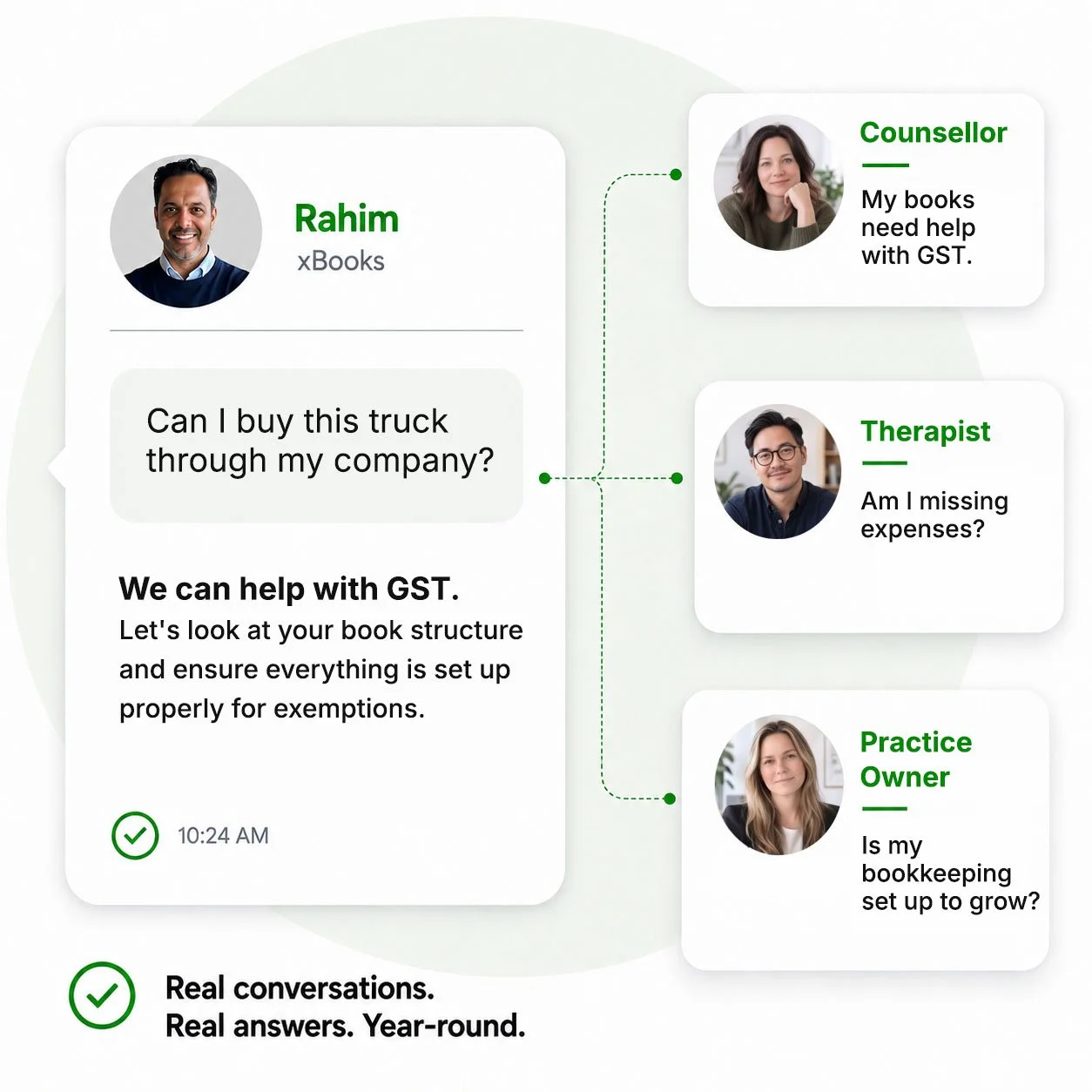
Bookkeeping for Counsellors & Therapists
We help counsellors and therapists in Vancouver with their bookkeeping, accounting and tax — from established solo practices to growing practices with associates.
Your practice may be straightforward. The accounting behind it isn't always.
A Private Practice Can Get Complicated Quickly.
A counselling practice can start out pretty simply. You see clients, collect your fees and pay the expenses that come with running the practice.
Then things change.
You rent an office. Pay for supervision and professional development. Start paying more expenses personally. Incorporate. Add an associate. Move from taxable to exempt services. Or discover that not everything you do is treated the same way for GST.
Suddenly, there are more things to keep track of — and more opportunities for something to be handled incorrectly or simply missed.
Good bookkeeping keeps the practice simple on your side, even when there’s more happening behind the scenes.
Built for Counsellors & Therapists
We work best with established service-based businesses looking for reliable support throughout the year—not just help during tax season.
Typical Business Size: We are generally the best fit for established businesses generating between $200,000 and $2 million in annual revenue.





Social Workers
Marriage & Family Therapists


Psychologists
Group Practices
Psychotherapists
Clinical Counsellors
Don’t see your practice listed? If you run a private counselling, therapy or mental health practice, we’d be happy to talk.
What We Help You Stay On Top Of
Every business has different bookkeeping needs.
That’s why we take the time to understand your business before providing a clear quote.


Client payments can come through Jane, Owl, payment processors or directly into the practice. We make sure the income recorded in the books agrees with what was actually earned and received.
Practice Income

Clinic rent, software, professional dues, insurance, supervision, training and other costs of running the practice need to be captured and recorded properly.
Practice Expenses
The GST rules for counselling changed significantly in 2024. We make sure the bookkeeping reflects which activities are exempt, which may still be taxable and how GST on your expenses should be handled.
GST

It’s common to pay for professional dues, training, supervision or other practice expenses personally. We make sure legitimate business expenses aren’t missed simply because they didn’t come out of the business account.
Personally Paid Expenses

We keep the bookkeeping ready for year-end and help take care of the accounting and tax work that follows.
Year-End & Tax

Financial Information
Good books let you see what the practice is actually earning, what it costs to operate and how those numbers change as the practice grows.
We’ll recommend the bookkeeping frequency that’s right for your business and provide a clear quote before any work begins.
Support is always included—it’s simply part of how we work.
GST for Counselling Practices Isn’t Always as Simple as “Exempt”.
When qualifying counselling and psychotherapy services became GST/HST exempt in 2024, it sounded like things were getting simpler.
From a bookkeeping perspective, they didn’t necessarily.
Not everything a practice does is automatically exempt. And once your services are exempt, the GST you pay on expenses may also need to be handled differently.
We’ve worked through these changes with counselling practices and have had to find practical ways to make the new rules work properly in the books.
That includes looking at what the practice actually does, separating services where necessary and making sure the bookkeeping is set up to handle GST consistently going forward.
Knowing the service is exempt is the easy part. Making sure the books work properly after the change is where experience matters.
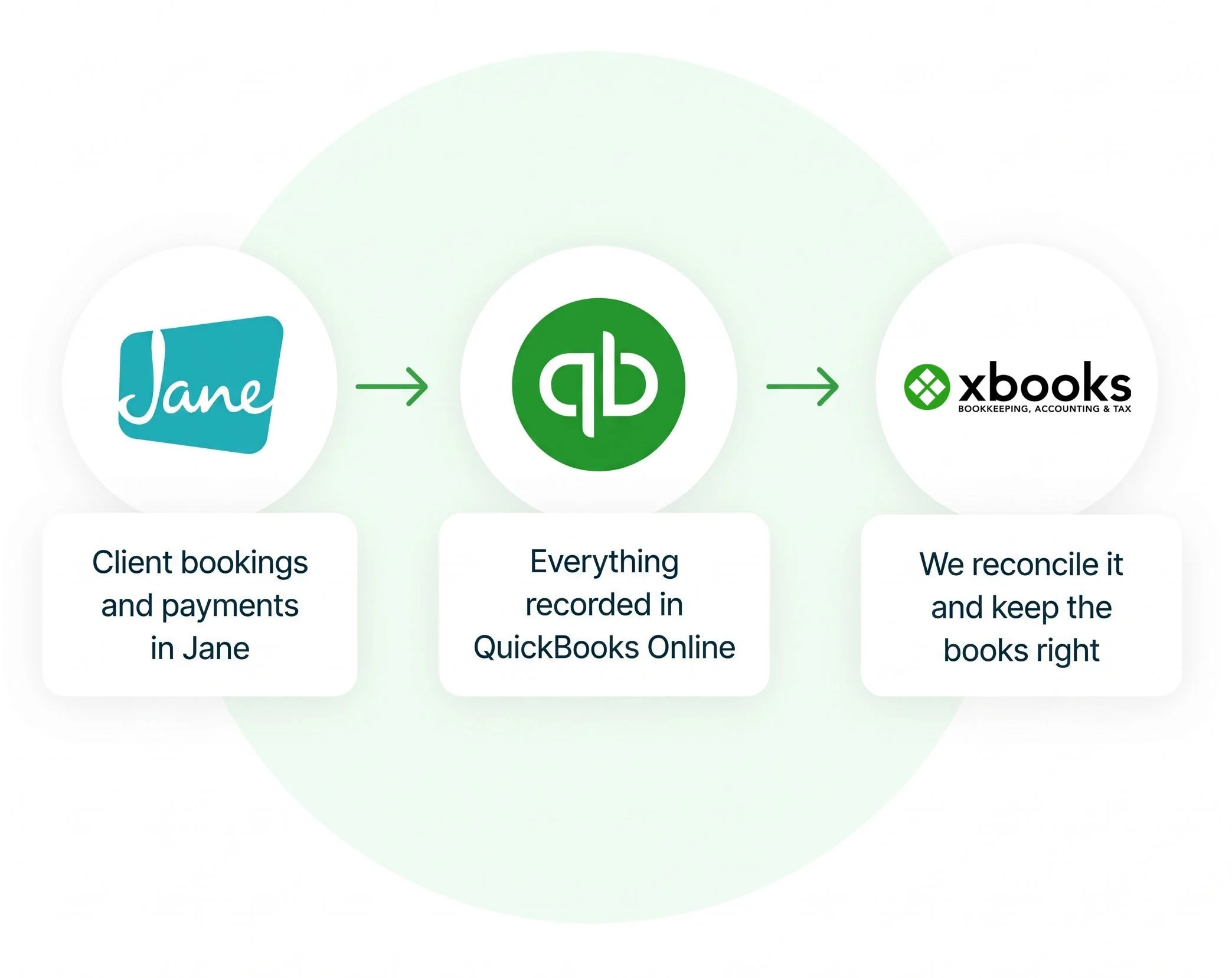
QuickBooks Online Works Particularly Well for Counselling Practices
We work with both QuickBooks Online and QuickBooks Desktop, but for counselling practices, we generally prefer QBO.
The GST exemption created bookkeeping challenges that aren’t always obvious. We’ve found that QBO gives us the flexibility to set things up in a way that handles those issues properly without making the bookkeeping unnecessarily complicated.
It also works well for practices using systems like Jane or Owl, where client activity and payments may happen outside the accounting software and need to be reconciled back to the books.
And as a practice grows, the same setup can continue to work as more activity, associates or other complexities are added.
QBO gives us the tools. The important part is knowing how to set it up for the way your practice actually operates.
From Solo Practice to Group Practice.
Many counselling practices begin with one practitioner. The money coming in belongs to you, the expenses are yours and the bookkeeping can be relatively straightforward.
Adding associates changes that.
Now the practice may be collecting fees for work performed by other practitioners. You need to keep track of what the practice earned, what belongs to the associate, what expenses the practice is covering and how everyone is being paid.
Depending on how the relationship is structured, there may also be contractor payments, payroll and other accounting considerations.
As more practitioners join, more money moves through the practice — and good bookkeeping becomes increasingly important.
The bookkeeping should make it easy to understand what the practice itself is actually earning, not just how much money passed through the bank account.
When Does It Make Sense to Incorporate?
Many counsellors start their private practice as sole proprietors. It’s simple, and for many practices it can make sense for quite a while.
As the practice becomes more established, incorporation often becomes part of the conversation.
But there isn’t a revenue number where you suddenly need a corporation.
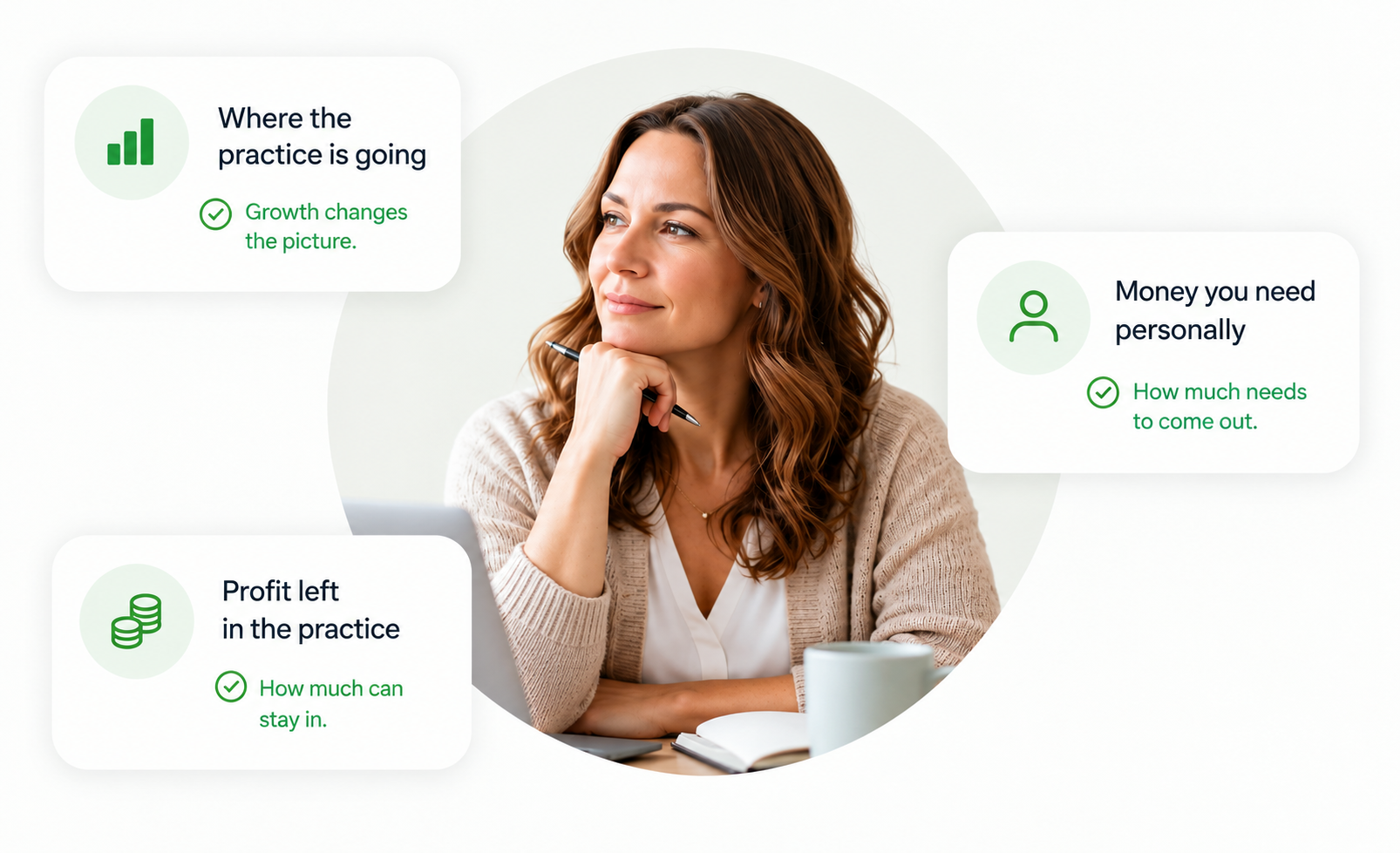
We look at the bigger picture — how much the practice is earning, how much money you need personally, whether profits can remain in the business and where you see the practice going.
If you’re considering incorporation, we can talk through the accounting and tax implications and help you understand what would actually change.
And if you decide to incorporate, we can help make the transition and look after the additional bookkeeping, accounting and tax work that comes with operating through a company.
Incorporation should solve a problem or create an advantage — not simply add another layer of administration.
Behind On Your Bookkeeping?
When your schedule is full of clients, bookkeeping is an easy thing to keep putting off.
A few months can turn into a year. Statements pile up. Expenses get paid personally. Tax deadlines get closer. And eventually it becomes difficult to know where to start.
That’s exactly what catch-up bookkeeping is for.
Whether you’re a few months behind or haven’t dealt with the books in several years, we’ll figure out where things stand, tell you what records we need and work through it from there.
You don’t need to organize everything before contacting us. Getting it sorted out is part of what we’re here to do.
Support That Fits the Way You Work
Not every counselling practice needs monthly bookkeeping.
A solo practitioner with a straightforward practice may only need the books completed once or twice a year. A larger practice with associates, payroll and more activity may need much more frequent attention.
The right schedule depends on the practice.

Annual
For straightforward solo practices that primarily need their bookkeeping completed for year-end and tax filing.

Semi-Annual
For practices that want the books updated during the year without needing ongoing quarterly or monthly bookkeeping.

Quarterly
A good fit for many established practices that want their books kept reasonably current and their financial information easier to stay on top of.

Monthly
For growing or more active practices where associates, payroll, higher transaction volume or other complexity makes regular bookkeeping more useful.
We'll recommended the support schedule that fits your business today - and adjust it as your business grows.
Our goal is to keep you informed, organized, and in control.

Getting Started Is Simple



We’ll Figure Out What You Need
We’ll look at where things stand, how the practice operates and recommend a level of support that makes sense.
Let’s Talk
We’ll learn about your practice, how your bookkeeping and tax are being handled today and what kind of support you’re looking for.

We’ll Get You Set Up
Once you’re ready to move forward, we’ll get everything set up and start keeping your books organized and up to date.
Frequently Asked Questions
-
Qualifying counselling therapy and psychotherapy services became exempt from GST/HST in 2024. But that doesn’t necessarily mean everything a practice does is exempt. The services provided and how the practice operates still matter.
-
It depends. If your practice only provides exempt services, you may no longer need to remain registered. If you also have taxable activity, the answer can be different. We can look at what your practice actually does and help make sure it’s being handled properly.
-
This is one of the important consequences of the exemption. GST paid on expenses related to exempt services generally can’t be recovered in the same way as GST associated with taxable activity. We make sure the bookkeeping is set up to handle this properly.
-
Yes. We work with practices using Jane and can reconcile the activity and payments back to the bookkeeping so the income recorded in QuickBooks agrees with what actually happened in the practice.
-
Yes. We generally prefer QuickBooks Online for counselling practices. We’ve found that it gives us the flexibility to deal with the GST changes, different types of activity and practice-management systems without making the bookkeeping unnecessarily complicated.
-
Yes. Group practices can have additional bookkeeping around money collected for associates, payments to practitioners, payroll or contractor arrangements and expenses paid by the practice. We set the bookkeeping up around how your particular practice operates.
-
Common expenses can include clinic rent, software, professional dues, insurance, supervision, training and other costs incurred to earn business income. What is deductible depends on the particular expense and circumstances, so we make sure expenses are recorded properly rather than relying on a generic list.
-
There isn’t one revenue level where incorporation automatically makes sense. We look at how much the practice earns, how much money you need personally, whether profits can remain in the business and your longer-term plans before discussing the accounting and tax implications.
-
That’s common. We make sure legitimate business expenses paid personally are captured in the bookkeeping rather than missed because they didn’t pass through the business bank account or credit card.
-
That’s fine. We can take care of the catch-up bookkeeping first and then determine what level of ongoing support makes sense.
-
For incorporated practices, we look after the bookkeeping and year-end preparation and work with a CPA partner for the corporate tax return when required.

Family Business Since 1984
For more than four decades, our family has helped Vancouver business owners stay organized, understand their numbers, and make better business decisions.
Today, we continue that tradition by combining responsive service, practical advice, and year-round support.
Let’s Talk About Your Practice.
If you’re looking for bookkeeping, accounting and tax support from people who understand how counselling practices actually work, let’s have a conversation
No pressure. Just a conversation.